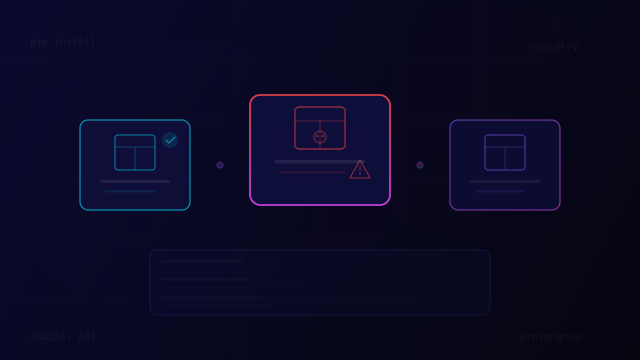
AI Supply Chain
Evaluate AI models, MCP servers, plugins, datasets, and agents before integrating them into your stack. Spot trojanized models, poisoned datasets, and backdoored tools hiding behind legitimate-looking registries.
Ready to play?
Put your awareness to the test. See if you can spot the threats before it's too late.
Launch GameWhy This Matters
The AI supply chain is the new software supply chain — and it's even harder to secure. Every AI model, plugin, MCP server, and training dataset you integrate is a potential attack vector.
Unlike traditional software dependencies, AI components can be compromised in ways that are invisible to code review. A poisoned training dataset produces models that behave normally in testing but fail dangerously in specific scenarios. A trojanized model can exfiltrate data through its inference API. An MCP server with database access has the same privileges as a database administrator.
The AI ecosystem's rapid growth means registries are flooded with typosquatted packages, fake models impersonating major labs, and 'enhanced' forks of official tools that add hidden backdoors. The attack surface includes not just code execution, but data poisoning, model manipulation, and credential harvesting through environment variable access.
What You'll Learn
Evaluate AI component trustworthiness using publisher verification, provenance, and permission analysis
Recognize typosquatting and brand impersonation targeting AI model and tool registries
Understand data poisoning as a supply chain attack that doesn't require code execution
Assess whether an AI component's permissions are proportionate to its stated functionality